
The New Food Pyramid: Were We Wrong to Trust It in the First Place?


The New Food Pyramid: Were We Wrong to Trust It in the First Place?
If you grew up with the food pyramid, you’re not alone if it’s left you feeling a little… whiplashed.
One decade it’s “base your diet on grains,” then it’s “use the plate model,” and now the pyramid is back again, but flipped upside down. And if your first reaction is, “Wait—what are we supposed to do with this?” that reaction is completely reasonable.
In this episode, we unpack what the new (upside-down) food pyramid is signalling, why it’s creating so much debate, and how to stay grounded when nutrition guidance starts to feel more political than practical.
A quick refresher: what the old pyramid taught most of us
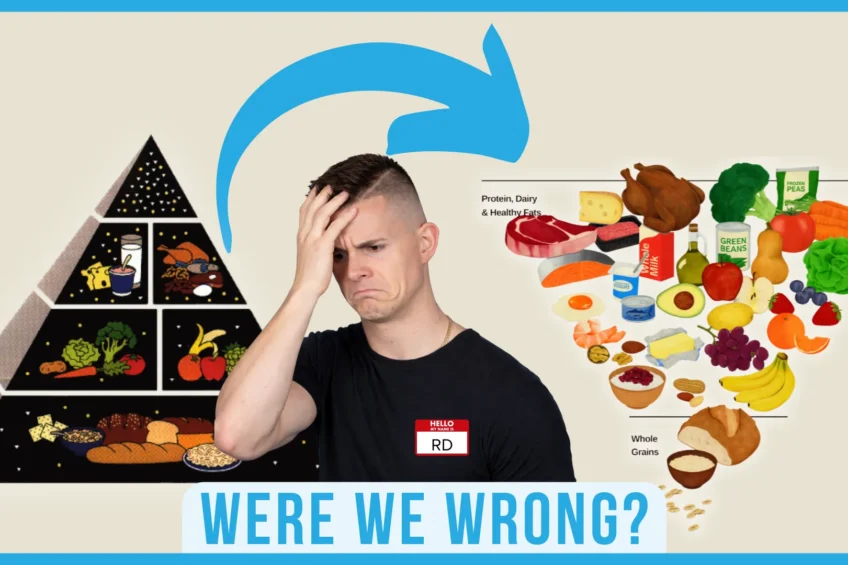
The classic pyramid many people remember put grain foods at the base, then fruits and vegetables, then protein foods (including dairy and animal-based proteins), with fats and sweets in the smallest “top” section.
It was meant to be a simple visual guide. In reality, it often became a rigid rulebook, and for many people it didn’t translate well into day-to-day eating.
So what’s different about the “new” pyramid?
The big headline from the conversation is this: the new pyramid is upside down, and the largest section emphasizes protein, dairy, and “healthy fats,” with a lot of that emphasis leaning toward animal-based protein sources. Plant-based proteins get far less space in the visual. Fruits and vegetables are present, but the base (the least-emphasized part) is whole grains.
That’s a major shift in messaging, and it’s why people are reacting so strongly. When the “biggest part” of the graphic changes, it doesn’t just tweak nutrition advice—it changes what people think matters most.
The bigger question: why bring the pyramid back at all?
A point raised in the episode is that the pyramid is not even the visual most people use anymore. Many folks recognize the plate model more easily, and it’s generally more practical (because it looks like an actual meal).
So reintroducing a pyramid—especially a redesigned one—can create confusion, even before we get into the nutrition debate.
If a public health tool is meant to make eating clearer, it’s fair to ask: is this doing that?
When “nutrition guidance” starts to feel like politics
This episode also explores something a lot of people quietly suspect: major nutrition guidelines don’t exist in a vacuum.
Even when a process is described as “evidence-based,” the conversation highlights concerns about conflicts of interest and the idea that industry representation can shape what gets emphasized (and what gets left out). The episode points to examples like strong support for legumes and plant proteins being reduced or rejected compared to other priorities.
You don’t have to be cynical to be thoughtful here. It’s possible to respect nutrition science and acknowledge that large-scale policy can be influenced by many pressures.
The “beans” example: why this matters to real people
One of the most practical parts of the discussion is about legumes (beans, lentils, chickpeas).
They’re nutrient-dense, affordable, and often recommended for heart health, fibre, and overall dietary quality. When guidance downplays foods like this, it can land hardest on people who are already dealing with rising grocery costs and trying to eat well on a budget.
A helpful reminder from the episode: nutrition advice isn’t just about nutrients—it’s also about access, affordability, and what’s realistic in daily life.
A nutrition reality check: the saturated fat piece
Another key point raised: if guidance heavily emphasizes animal-based proteins and dairy, it may become harder for some people to stay within common saturated fat targets (the episode specifically discusses the “10% of calories” idea and how quickly saturated fat can add up with typical animal-based choices).
This isn’t about demonizing any one food. It’s about noticing the tension that can happen when a visual encourages more of certain categories, while other recommendations (like saturated fat limits) remain in place.
So… were we wrong?
Not for believing in better health. Not for wanting simple guidance.
But the episode invites a gentler, more empowering reframe:
You weren’t “wrong” for following what you were taught. You were doing your best with the tools you were given.
What can change now is how we relate to nutrition messages going forward:
We can be curious instead of automatically compliant
We can look for patterns that support health, not perfection
We can choose flexibility over food fear
We can prioritize what consistently works: fibre, variety, minimally processed foods (when possible), and meals that fit your life
A grounded takeaway you can actually use
If nutrition headlines are making you feel pulled in five directions, try this approach:
Build meals around plants (vegetables, fruit, whole grains, legumes)
Add protein in a way that works for you (plant, animal, or both)
Include healthy fats for satisfaction and staying power
Aim for consistency, not dietary “revolutions”
If a guideline or graphic makes you anxious, you’re allowed to step back and ask, “Is this helping me eat better—or just making me second-guess everything?”
Want support making sense of it all?
At Revive Wellness (our “living lab”), our dietitian team brings a wide range of expertise—blending strong clinical training with real-life practicality. We support clients through group-focused coaching designed to build sustainable routines, without the pendulum swings of nutrition trends. Our team includes an IOC Diploma in Sports Nutrition (the highest credential in the field), Certified Diabetes Educators, dietitians with expertise in vegan/vegetarian nutrition, plus clinicians who focus on everything from gut health and heart health to performance and everyday wellbeing—all united by a genuine love of this work.
If you want help sorting through mixed messages and building an approach that fits your body, goals, and lifestyle, we’re here. Book a free 15-minute discovery call with one our Registered Dietitians today!
