
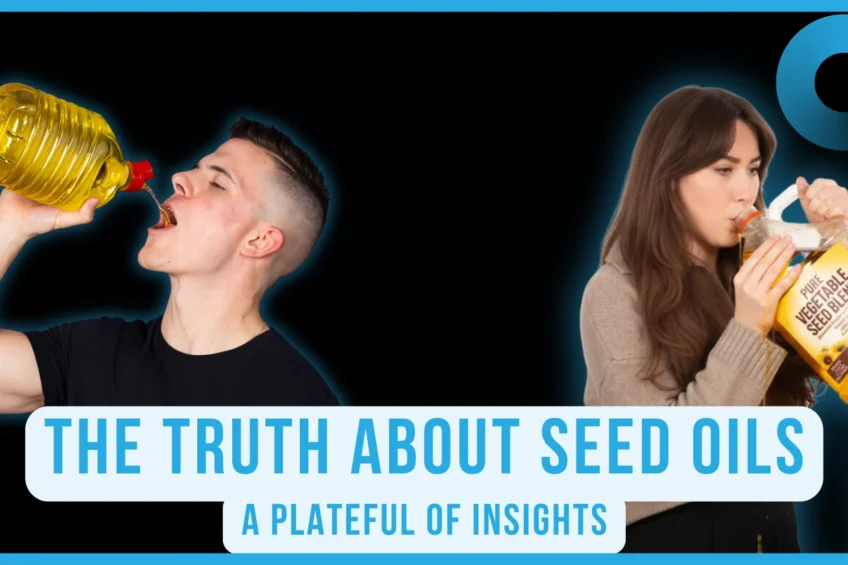
The Truth About Seed Oils: Separating Fear, Facts, and Nuance
Where to watch or listen to this episode


The Truth About Seed Oils: Separating Fear, Facts, and Nuance
Seed oils have become one of the most talked-about—and most controversial—topics in nutrition. Depending on where you look, you might hear that they cause inflammation, weight gain, chronic disease, or that they should be avoided at all costs. For many people, this messaging creates anxiety around food rather than clarity.
So let’s slow things down and take a more grounded look at what seed oils are, why they’ve become such a hot topic, and what the science actually tells us.
Why Are Seed Oils Getting So Much Attention?
Seed oils like canola, soybean, sunflower, corn, and safflower oil are commonly used in home cooking and food manufacturing. Over time, they’ve become an easy target in online nutrition conversations—often framed as “toxic,” “unnatural,” or uniquely harmful.
Part of this narrative comes from the idea that seed oils are highly processed, high in omega-6 fats, and therefore inflammatory. It sounds convincing on the surface, especially when paired with the belief that inflammation is the root cause of most chronic disease.
But nutrition science is rarely that simple.
Omega-6 Fats and Inflammation: What We Actually Know
Omega-6 fatty acids are essential fats, meaning our bodies need them to function. While it’s true that omega-6 and omega-3 fats work together in the body, research does not consistently show that consuming seed oils in typical amounts causes chronic inflammation in humans.
In fact, many large population studies show neutral—or even protective—associations between seed oil consumption and cardiovascular health. This doesn’t mean seed oils are a “superfood,” but it does mean they’re not the villain they’re often made out to be.
Context matters. Total dietary patterns, lifestyle, stress, sleep, and overall nutrition quality play a much bigger role in health outcomes than a single ingredient.
Processing, Perfection, and the Bigger Picture
It’s also worth acknowledging that seed oils are often found in ultra-processed foods. When people feel worse eating foods that contain seed oils, it’s understandable—but that doesn’t mean the oil itself is the sole issue. Highly processed foods tend to be lower in fibre, less satisfying, and easier to overconsume, which can affect how we feel physically and mentally.
Focusing only on removing seed oils can distract from more meaningful, sustainable changes—like eating more whole foods, getting enough protein and fibre, and building meals that are enjoyable and nourishing.
A More Compassionate Way to Think About Seed Oils
Rather than asking, “Are seed oils bad?” a more helpful question might be:
“How does this food fit into my overall eating pattern and my life?”
For most people:
- You do not need to fear seed oils.
- You do not need to eliminate them to be healthy.
- You do benefit from variety, balance, and flexibility in your food choices.
Nutrition doesn’t need to be extreme to be effective. It needs to be realistic, evidence-based, and supportive of long-term well-being.
The Bottom Line
Seed oils have taken on an outsized role in nutrition debates, often driven more by fear than by evidence. When we zoom out, the research doesn’t support the idea that seed oils are uniquely harmful or responsible for widespread chronic disease.
Health is built through patterns, not perfection. If conversations about food are leaving you confused or anxious, that’s often a sign to pause, seek credible information, and bring some compassion back into the picture.
If you’re looking for guidance that cuts through nutrition noise and focuses on what actually supports your health, you don’t have to navigate it alone. A Registered Dietitian can help you make sense of nutrition in a way that’s practical, balanced, and sustainable.